Why SEO Still Matters in 2025: Debunking the AI Myth
Introduction: The SEO vs. AI Debate
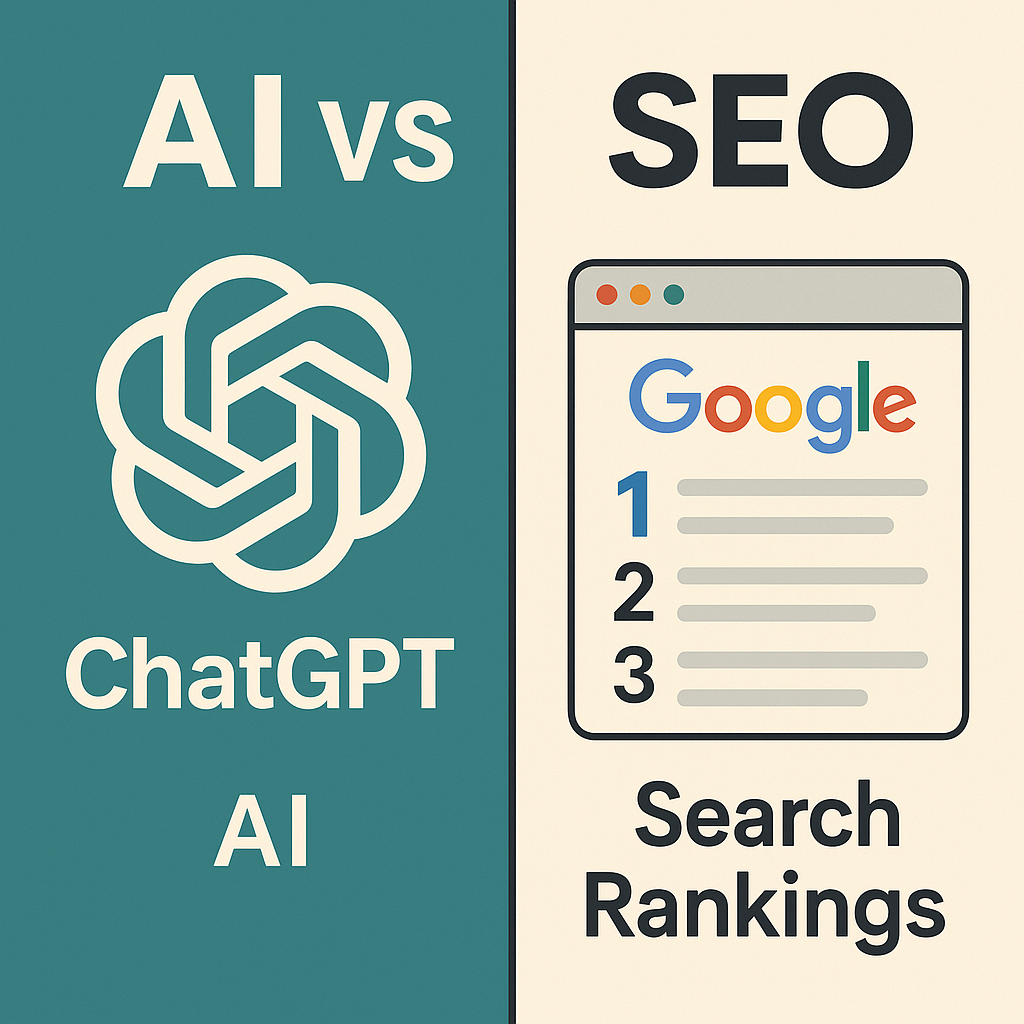
In recent years, conversations around digital marketing have taken a sharp turn. With tools like ChatGPT, Perplexity, and Google’s Search Generative Experience (SGE) on the rise, many business owners wonder: “Is SEO dead?”
The short answer? No. SEO still matters in 2025 more than ever.
While artificial intelligence is changing how people search, it hasn’t replaced the need for websites, content, and optimization. In fact, businesses that double down on smart SEO practices are thriving in this new landscape.
The Common Misconception: Is ChatGPT Killing SEO?
The Rise of AI-Powered Search
AI chatbots can generate answers in seconds, giving users a quick way to find information. Instead of scanning through multiple websites, people can simply “ask” AI.
Why Businesses Fear the End of SEO
The fear comes from the assumption that AI will take all traffic. If people get their answers from ChatGPT or Google AI, won’t clicks disappear? Not quite.
Studies show users still verify facts, dive deeper, and compare sources. AI summaries may shorten the journey, but websites remain the foundation of knowledge. Without content creators, AI has nothing to summarize.
The Evolution of SEO in the Age of AI
From Keywords to User Intent
Gone are the days of keyword stuffing. Modern SEO is about matching user intent—understanding what people truly want and delivering it clearly.
Search Engines vs. AI Chatbots
AI answers are helpful, but they lack context, authority, and personal experience. Search engines still play a vital role in indexing, ranking, and organizing billions of websites.
How SEO Practices Are Adapting
Marketers are focusing on:
- Conversational keywords that reflect how people speak to AI.
- EEAT (Experience, Expertise, Authority, Trust) to prove credibility.
- Rich media like videos, images, and podcasts to capture attention.
Why SEO Still Matters in 2025
SEO is About Visibility, Not Just Keywords
Even if AI summaries dominate, websites that rank higher are still referenced, linked, and recommended. Being visible remains critical.
Trust, Authority, and Organic Traffic
A top-ranking website builds credibility. Customers trust Google’s first page far more than paid ads or unverified AI blurbs.
Human Behavior: People Still Google
Every single day, billions of searches happen on Google. Despite AI’s popularity, people crave multiple perspectives and detailed answers.
SEO and AI Can Work Together
AI for Content Creation and Optimization
AI tools can help brainstorm ideas, draft outlines, and optimize content. Smart businesses use AI as a partner, not a competitor.
Smarter Keyword Research with AI Tools
AI tools like Semrush AI Assistant and Ahrefs integrate machine learning to uncover new search trends faster than ever.
AI-Powered Analytics and SEO Insights
Instead of guessing, businesses can analyze audience intent, engagement, and behavior in real time using AI-powered dashboards.
Google’s Role in Keeping SEO Alive
Search Generative Experience (SGE) Explained
Google is rolling out AI-powered answers in search results. But it still references websites to give credit and ensure accuracy.
Why Google Still Relies on Websites
Without websites publishing blogs, product pages, and reviews, AI would have no raw data. This means businesses that invest in SEO will still benefit from organic exposure.
Practical SEO Strategies That Work in 2025
Optimizing for Conversational Search
As AI-driven search becomes more natural, businesses should target long-tail, conversational keywords that mirror how people speak.
EEAT (Experience, Expertise, Authority, Trust)
Google now prioritizes content created by experts with real-world knowledge. Businesses should highlight case studies, testimonials, and author credentials to stand out.
Multimedia SEO: Video, Voice, and Images
Video SEO on YouTube, voice search optimization, and image-rich content are exploding in demand. The future of SEO is multi-format visibility.
Case Studies: Businesses Thriving with SEO in 2025
Local Business SEO Success
A local dental clinic optimized its Google Business Profile and began ranking in “near me” searches. Within six months, bookings increased by 45%.
E-commerce SEO Wins
An online clothing store embraced conversational product descriptions and short-form video SEO. Result: 120% growth in organic sales.
FAQs About SEO in the Age of AI
1. Is SEO dead because of ChatGPT?
No. SEO is evolving. ChatGPT relies on existing web content, meaning businesses must continue creating optimized websites.
2. Will AI replace Google search completely?
Unlikely. AI enhances search but doesn’t replace the need for websites, rankings, and organic visibility.
3. Should small businesses still invest in SEO in 2025?
Yes. Local SEO, reviews, and optimized websites remain powerful tools for small businesses.
4. What type of SEO works best in 2025?
Conversational search optimization, EEAT-driven content, and multimedia SEO are leading strategies.
5. How long does it take to see SEO results today?
Typically 3–6 months, depending on competition and strategy. With AI tools, optimization can be faster.
6. Is AI-generated content good for SEO?
AI content can help, but it must be edited for accuracy, originality, and EEAT compliance to rank well.
Conclusion: SEO Isn’t Dead—It’s Smarter Than Ever
In 2025, SEO still matters more than ever. AI tools may change how people discover information, but they don’t eliminate the need for visibility, trust, and authority. Businesses that adapt—focusing on user intent, EEAT, conversational queries, and multimedia—will continue to dominate search results.
🔗 For further reading: Google Search Central Blog – Google’s official updates on SEO best practices.
Final Word
The truth is clear: ChatGPT isn’t killing SEO. It’s making it smarter, faster, and more competitive.
Ready to build SEO that drives real results?
Let’s create a strategy that works for you, not against you.