


CASE STUDY — Scaling a Swimwear Brand with Paid Meta Ads Alone
(No Website Optimisation. Limited Email Optimisation. No Fancy Social Media.)
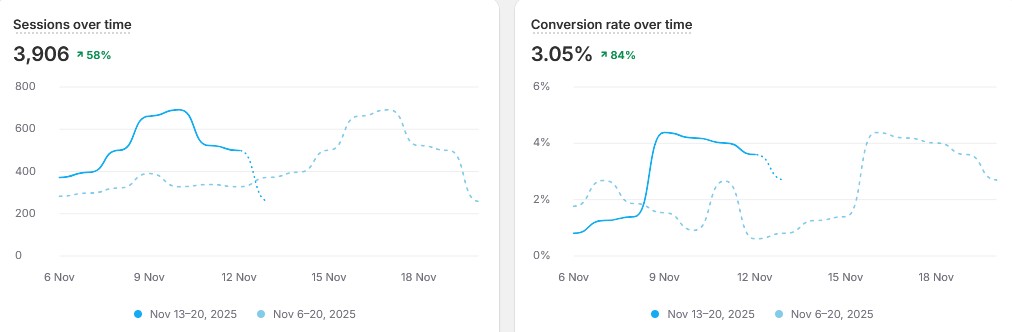
Campaign Period: 8 Nov 2025 (10:30pm) → 20 Nov 2025. Campaign is Ongoing
Objective: Drive sales quickly during peak swimwear season using paid Meta ads — with no backend optimisation and minimal organic presence.
🧩 Background
This brand came to me frustrated.
They were pouring time into social media with little return, their website conversion rate was underperforming, and emails weren’t optimised to recover carts or nurture buyers.
They had achieved a ROAS of 1.44 over the last 25 months and were pouring $ into ineffective Meta Ads.
They weren’t ready for a full digital overhaul — they just needed revenue, fast.
So I deployed a clean Meta ads strategy designed to:
Capture existing seasonal demand
Warm up cold audiences who look like their best customers
Leverage high-intent ad creative (not fluffy brand awareness)
No CRO.
Limited email flows.
No organic content strategy.
Just profitable ads and smart targeting.
📈 Results in 11 Days
| Metric | Result |
|---|---|
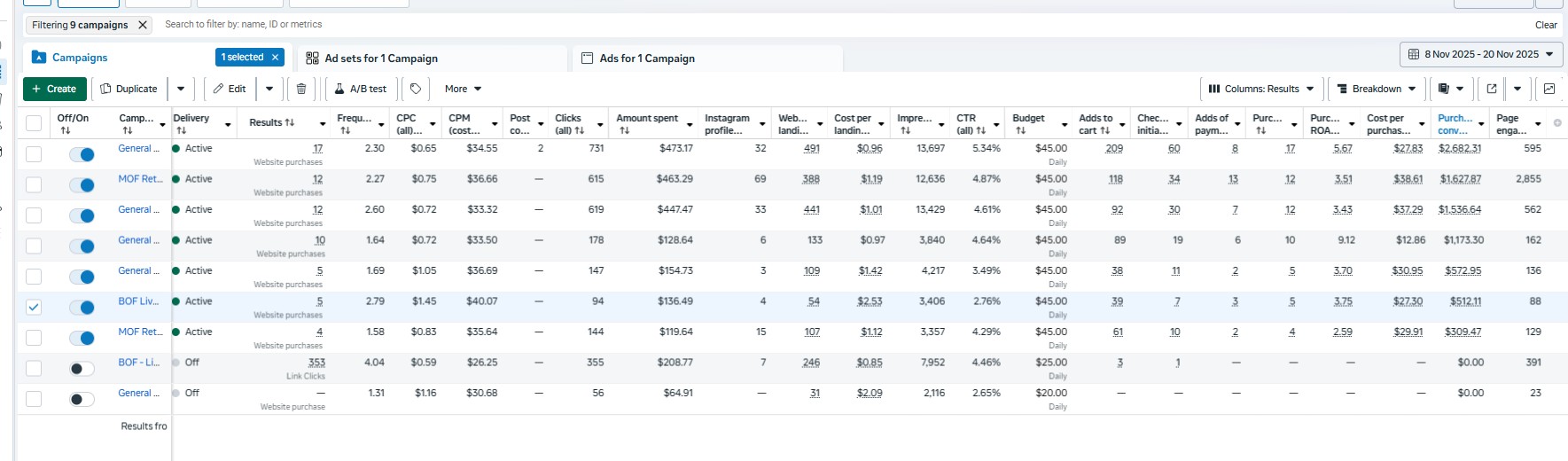
| Spend | $2,121.25 |
| Purchase Conversion Value | $8,355.34 |
| Average Return on Ad Spend (ROAS) | 3.94 |
| Purchases (Meta attribution) | 64 (Shopify recorded even more) |
| Average Cost per Purchase (CPP) | $33.14 |
| Add to Carts | 643 |
| Landing Page Views | 1,950 |
| Clicks | 2,866 |
| Average Click-Through Rate (CTR) | 4.56% |
| Instagram Profile Visits | 169 |
| Page Engagement | 4.824 |
💥 In other words:
For every $1 the client spent on ads, the brand made an average of $3.94 back — without touching the website, limited tweaks to emails or socials.
🔍 Why These Numbers Matter
Most agencies brag about ROAS… while secretly running “brand awareness” ads that don’t actually sell anything.
This strategy focused on only one thing: sales with trackable ROI.
Some highlights:
CTR well above industry standard (anything over 1% is considered good — this campaign hit up to 5.84%)
643 Add-to-Carts with a poorly optimised email recovery flow running (aka: money left on the table)
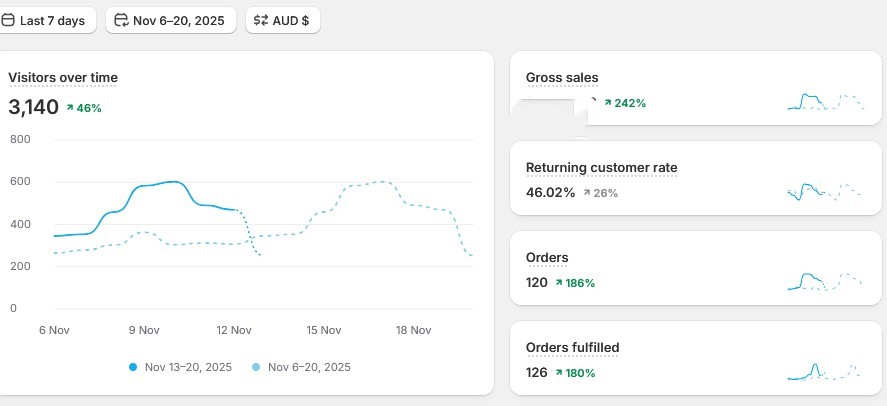
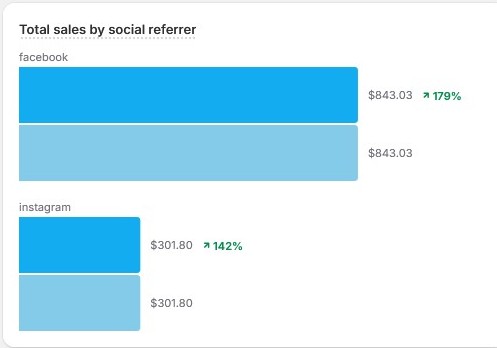
Shopify tracking shows more purchases than Meta attribution which means ads are driving halo sales beyond the tracked 64 purchases. Shopify recorded 146 purchases.
- The numbers are moving so fast that every time I refresh Meta Ad Manager and Shopify they have improved.
The campaign is profitable — and the ceiling is nowhere near reached.
🚀 Next Steps (Now That Ads Are Proving Demand)
The brand is now ready to compound results by:
Fixing website conversion blockers
Optimising Klaviyo or automations (browse abandonment, ATC, welcome, post-purchase)
Creating social content that mirrors winning ad angles
Scaling ad budget safely based on performance data
Expanding creative around top-selling SKUs and sizes
The ads have already proven:
💧 people want the product
🔥 people are ready to buy right now
📦 revenue is sitting on the table waiting to be unlocked
💬 Client Takeaway
This is what happens when ads are done strategically — not “boosting posts” or crossing fingers hoping for sales.
Once the backend is optimised and the organic strategy supports demand instead of working against it, the brand is positioned to:
✔ scale profitably
✔ reduce cost-per-purchase
✔ build predictable revenue (not seasonal spikes)
🏅 Summary
In just 11 days, paid ads generated:
$8,355.34 in Meta tracked revenue from Meta Ad spend of $2,121.25
2.59 to 9.12 ROAS
64+ purchases (with more untracked Shopify sales)
📌 And this isn’t the ceiling — this is the starting point.
Ads are profitable without a high-performing website, without emails, and without consistent social media.
Now imagine what results look like once we fix those.